
A builder who learned to heal himself.
I'm a neuropsychiatrist, engineer, and serial healthcare entrepreneur. Surviving cancer at 22 changed how I practice medicine.
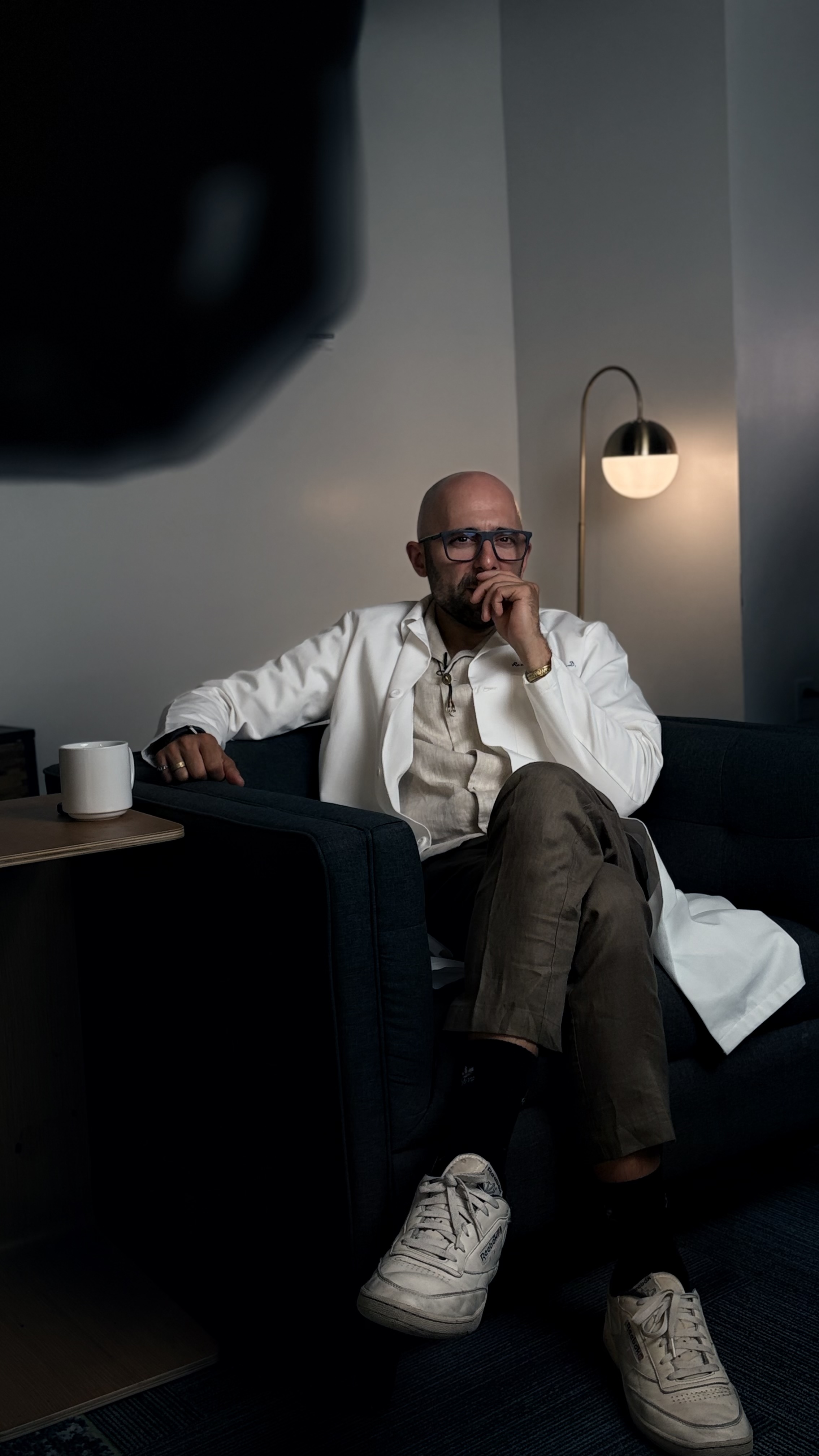
The most important science about the brain belongs to everyone.
The long version
My clinical practice with Frontier Psychiatry primarily serves rural areas: Montana, Idaho, Wyoming and Alaska. Most of my time, though, goes to MedFlow — my fourth healthcare startup — advancing patient care through health technology. The mission stays the same throughout: making care more accessible, more affordable, less invasive, and more personal.
The detour
My route to medicine was not the usual one. I studied electrical and computer engineering at Rensselaer Polytechnic Institute and went to work in systems engineering for the US Navy on the DDG-1000 Zumwalt Class Destroyer. Then Hodgkin's lymphoma made me a patient, and the path bent.
A biomedical engineering degree at Johns Hopkins followed, then a research fellowship at Massachusetts General Hospital, where I developed a novel MRI device for measuring lower leg muscle metabolism during exercise. That project settled it: I wanted to solve medical problems through engineering. Working on those clinical studies I also saw the doctor-patient relationship from both sides, which is when I decided to become a physician engineer — someone who could address the technical problems without leaving the exam room.
Medicine, and then engineering again
During medical school at UMass I founded the Worcester Free Clinics Coalition and worked with VecnaCares to deploy an electronic health record system. I taught yoga for cancer patients and supported children with cancer through the UMass Sidekicks program.
Curiosity about the mind took me to psychiatry residency at the University of Washington, then fellowship training in movement disorders with a focus on behavioral neurology. That training is what lets me diagnose and treat complex neurodegenerative disease: early-onset Alzheimer's, frontotemporal dementia, Parkinson's disease, progressive supranuclear palsy, corticobasal degeneration. After building a memory program at EvergreenHealth in Kirkland, Washington, I moved fully to Frontier Psychiatry in Montana.
Humor is part of the method
In clinic and in life, I use lighthearted observation to connect — with patients, with colleagues, in a world that is more distracted every year. It brings levity to difficult conversations and shows that even in a frightening situation there is usually a reason to smile.
Off the clock
Balance comes from sport — especially mountaineering, or anything in the outdoors — community service, usually environmental restoration, plus travel and cooking.